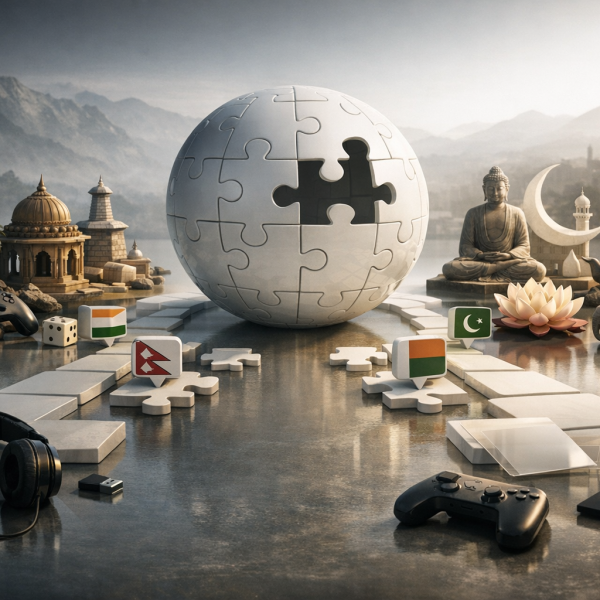
Adapting video games for South Asian players is far more complex than swapping English text for Hindi, Bengali, Tamil, or Urdu. Successful localization must navigate different scripts, mixed alphabets, cultural sensitivities, and rapidly evolving gaming communities. When done correctly, it transforms a game from a foreign product into a familiar, native experience that players can immediately connect with.
1. Understanding the Diversity of South Asian Languages
South Asia is not a single language market. Hindi, Urdu, Bengali, Punjabi, Tamil, Telugu, Marathi, Gujarati, Sinhala, and many others each have their own scripts, grammatical structures, and regional variations. Game localization specialists begin by mapping which language varieties matter most for the target audience and platform. For example, a mobile battle royale may prioritize Hindi and Bengali, while a story-heavy RPG may need deeper support for Tamil and Telugu.
This initial research phase helps determine whether to localize into multiple languages at once, roll out languages in stages, or focus on one dominant language while preparing glossaries for fast expansion later. Without this groundwork, studios risk spending heavily on languages that deliver minimal engagement while overlooking communities that could drive long-term growth.
2. Choosing the Right Script and Orthography
Languages like Urdu can be written in Perso-Arabic script, while related speech forms in neighboring regions may appear in Devanagari or Latin transliteration. Similarly, Punjabi is written in Gurmukhi in India and Shahmukhi in Pakistan. Game localization teams must decide which script is most appropriate for each market, ensuring UI, dialogs, subtitles, and on-screen text are legible, consistent, and aesthetically aligned with the game’s art style.
Professional providers such as Turkish translation company bring valuable experience from other multilingual regions, understanding how script choices affect readability, display performance, and players’ emotional connection to the game world.
3. Handling Complex Scripts and Rendering Issues
South Asian languages frequently use complex writing systems, including conjunct characters, diacritics, and right-to-left rendering in the case of Urdu. Game engines and UI frameworks do not always support these natively. Localization experts work closely with technical teams to:
- Verify that fonts contain complete glyph sets for each target script
- Configure proper shaping and ligature handling for Devanagari, Bengali, and similar scripts
- Implement right-to-left layout support for interfaces and subtitles where needed
- Prevent character clipping, overlapping, or broken line wrapping in menus and HUDs
This technical work ensures that players see polished, readable text rather than broken or awkwardly displayed language that undermines immersion.
4. Building Game-Specific Terminology and Glossaries
Many gaming terms, especially in genres like MMORPGs or shooters, do not have widely recognized equivalents in South Asian languages. Localization experts collaborate with native-speaking gamers to decide whether to:
- Create natural-sounding native terms that fit the language
- Borrow English gaming jargon directly
- Use a hybrid approach, mixing local words with familiar English phrases
Glossaries and term bases are then developed to ensure consistent translation of skill names, weapons, character classes, and system menus across updates and expansions. This consistency prevents confusion and helps build a recognizable in-game vocabulary that communities can talk about and share online.
5. Respecting Cultural Nuances and Sensitivities
South Asia is culturally diverse, with layered religious traditions, social norms, and historical contexts. Game localization professionals assess storylines, character designs, voice lines, and even visual symbols to avoid:
- Religious imagery used in disrespectful or trivial ways
- Dialog that clashes with local norms for politeness or family relationships
- Color and icon choices that carry unintended negative associations
In some cases, this means adjusting jokes, rewriting quest descriptions, or toning down specific scenes. The goal is not censorship but alignment, so players feel that the game respects their cultures while preserving the core creative vision of the developers.
6. Adapting Voice-Over and Lip-Sync
When a game includes voiced dialog, localization becomes more challenging. South Asian languages can be more verbose than English or can condense the same idea in fewer syllables. To keep cutscenes smooth:
- Scripts are adjusted to match scene timing without losing key narrative details
- Voice talent is cast to reflect regional accents and character personalities
- Lip-sync or facial animation is fine-tuned where the engine allows for it
By paying attention to pacing and emotional tone, localized voice-over helps South Asian players connect with characters as if the game were written in their language from the beginning.
7. Localizing UI, Tutorials, and Onboarding
Many players in South Asia will encounter a franchise for the first time via mobile or free-to-play versions. Clear onboarding in their own language is critical. Localization specialists refine:
- Tutorial prompts and tooltips for clarity and brevity
- Button labels and menu structures to fit longer or shorter text strings
- System messages and error alerts so they are easily understood by new players
This practical localization work makes the game more accessible, reducing early drop-offs and encouraging users to explore deeper content, in-app purchases, and social features.
8. QA, Regional Testing, and Player Feedback
After translation and integration, specialized quality assurance is essential. Testers fluent in the target languages go through the entire game to spot:
- Truncated or overflowing text in menus and dialogs
- Mistranslations that change gameplay instructions or quest objectives
- Cultural issues that only become obvious in context
Once the game launches, ongoing monitoring of player reviews, social media, and community forums guides updates. Localization teams treat this feedback loop seriously, updating terms, fixing awkward phrasing, and refining content as South Asian gaming communities grow and their expectations evolve.
9. Coordinating Multilingual Releases Across Regions
South Asian markets are often part of broader regional release strategies that include the Middle East, Southeast Asia, and Europe. Localization vendors coordinate schedules so that all language versions ship together, or at least within an acceptable window, to prevent one region from feeling like an afterthought.
This coordination covers translation timelines, voice recording sessions, integration into builds, and store listing updates on major platforms. Consistent release management strengthens brand perception and helps publishers run synchronized marketing campaigns across languages.
10. Planning for Live Operations and Continuous Updates
Most modern games operate as live services with frequent patches, seasonal events, and new content drops. For South Asian languages, localization teams design scalable workflows from the start, including:
- Translation memory systems to speed up recurring UI strings
- Flexible glossaries that evolve with new features and items
- Agile review processes so hotfixes and events can be localized on tight deadlines
This long-term approach ensures that South Asian players receive updates at nearly the same pace as global audiences, reinforcing trust and engagement over years rather than weeks.
Treating South Asian Localization as a Core Strategy
Effective game localization for South Asian languages is not a quick translation task but a strategic investment. By respecting linguistic diversity, resolving technical script challenges, aligning with cultural expectations, and committing to continuous improvement, developers can unlock millions of passionate players across the region. Studios that treat South Asian localization as integral to their design and live operations are far more likely to see long-term success in one of the world’s fastest-growing gaming markets.